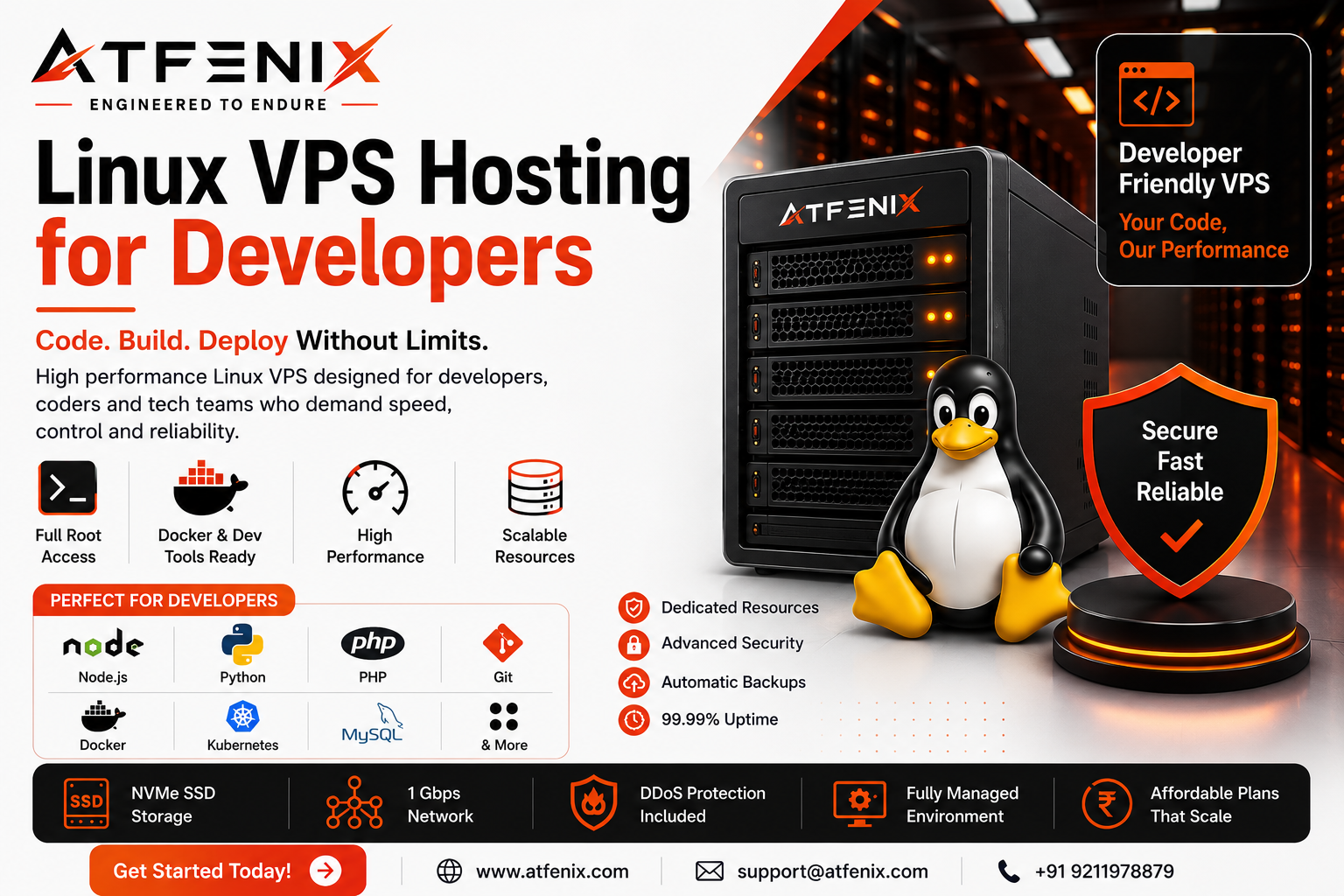
Modern software development demands speed, flexibility, and reliability. Whether you’re building web applications, APIs, SaaS products, AI applications, or mobile backends, shared hosting often becomes a bottleneck.
A Linux Virtual Private Server (VPS) provides developers with dedicated resources, root access, and complete control over their development environment without the high cost of a dedicated server.
In this guide, we’ll explain why Linux VPS is the preferred choice for developers, its key benefits, use cases, and how to choose the right VPS for your projects.
What is Linux VPS Hosting?
Linux VPS Hosting is a virtual private server powered by a Linux operating system. Unlike shared hosting, each VPS has its own:
- Dedicated CPU
- Dedicated RAM
- Dedicated Storage
- Independent Operating System
- Root Access
This isolation gives developers complete freedom to install, configure, and optimise their environment.
Why Developers Prefer Linux VPS
Developers require environments that are stable, customizable, and compatible with modern technologies.
A Linux VPS provides:
- Full SSH Access
- Root Privileges
- Better Performance
- High Security
- Faster Package Management
- Open Source Ecosystem
- Lower Licensing Costs
These features make Linux the first choice for software engineers worldwide.
Benefits of Linux VPS Hosting for Developers
1. Full Root Access
Developers can install any software stack including:
- Apache
- Nginx
- Node.js
- Python
- PHP
- Java
- Go
- Rust
- Docker
- Kubernetes
There are no hosting restrictions.
2. Better Performance
Unlike shared hosting, VPS resources are reserved exclusively for your server.
Benefits include:
- Faster application response
- Lower latency
- Better build performance
- Stable traffic handling
3. Easy Development Environment
A Linux VPS can be configured for virtually any framework:
- Laravel
- Django
- Flask
- Express.js
- Spring Boot
- Ruby on Rails
- ASP.NET Core (on supported Linux setups)
- React SSR
- Next.js
- Nuxt.js
4. Git Integration
Linux servers work seamlessly with:
Developers can automate deployments using Git hooks or CI/CD pipelines.
5. Docker Support
Most modern applications are containerised.
Linux VPS supports:
- Docker
- Docker Compose
- Kubernetes
- Podman
This makes deployment easier and more consistent across environments.
6. Cost-Effective
Compared to dedicated servers, Linux VPS offers excellent performance at a significantly lower monthly cost, making it suitable for startups, freelancers, and growing businesses.
Best Use Cases
Linux VPS Hosting is ideal for:
- Web Developers
- SaaS Applications
- WordPress Hosting
- APIs
- Backend Applications
- AI Projects
- DevOps Testing
- CI/CD Servers
- Game Servers
- VPN Servers
- Database Hosting
Popular Linux Distributions
Developers commonly choose:
Ubuntu Server
Best for:
- Beginners
- Node.js
- Python
- Docker
Debian
Best for:
- Stability
- Production Servers
AlmaLinux / Rocky Linux
Best for:
- Enterprise workloads
- cPanel compatibility
Essential Developer Tools
A Linux VPS can run:
- VS Code Remote SSH
- Git
- Docker
- Nginx
- Apache
- MySQL
- MariaDB
- PostgreSQL
- Redis
- MongoDB
- Jenkins
- GitLab Runner
Security Best Practices
To secure your Linux VPS:
- Disable root login over SSH (where appropriate)
- Use SSH keys instead of passwords
- Enable a firewall (UFW or firewalld)
- Keep packages updated
- Configure automatic backups
- Enable DDoS protection if available
- Use SSL/TLS certificates
- Monitor server logs
How to Choose the Best Linux VPS Hosting
Consider these factors:
NVMe SSD Storage
Faster storage significantly improves application performance.
Dedicated Resources
Choose plans with guaranteed CPU and RAM.
Root Access
Essential for full customization.
Network Speed
Look for high-speed connectivity with low latency.
Backup Options
Regular backups help protect critical data.
24/7 Technical Support
Reliable support is valuable when managing production workloads.
ATFenix provides developer-focused VPS solutions with features such as:
- High-performance Linux VPS
- NVMe SSD Storage
- Scalable resources
- Root Access
- DDoS Protection
- High-speed network connectivity
- Reliable uptime
- 24/7 technical support
Whether you’re building a startup MVP or running enterprise applications, Linux VPS can provide the flexibility and performance needed to grow.
Frequently Asked Questions
Is Linux VPS better than shared hosting?
Yes. Linux VPS offers dedicated resources, greater control, and improved performance compared to shared hosting.
Which Linux distribution is best for developers?
Ubuntu Server is widely used because of its extensive package ecosystem and community support, while Debian and Alma Linux are also excellent choices depending on your requirements.
Can I host multiple websites on one Linux VPS?
Yes. A VPS can host multiple websites and applications if the server resources are sufficient.
Is Linux VPS suitable for Docker?
Absolutely. Linux is the preferred platform for Docker and other container technologies.
Can I upgrade my VPS later?
Most VPS providers allow you to scale CPU, RAM, and storage as your workload grows.
Conclusion
Linux VPS Hosting offers developers a powerful, secure, and flexible platform for building and deploying modern applications. With dedicated resources, root access, support for popular development tools, and the ability to scale as your projects grow, it is a strong choice for freelancers, startups, and enterprise development teams alike.
If you’re looking for a reliable environment for coding, testing, deploying, and managing applications, Linux VPS Hosting for Developers is an investment that can improve both productivity and application performance.